

 Portuguese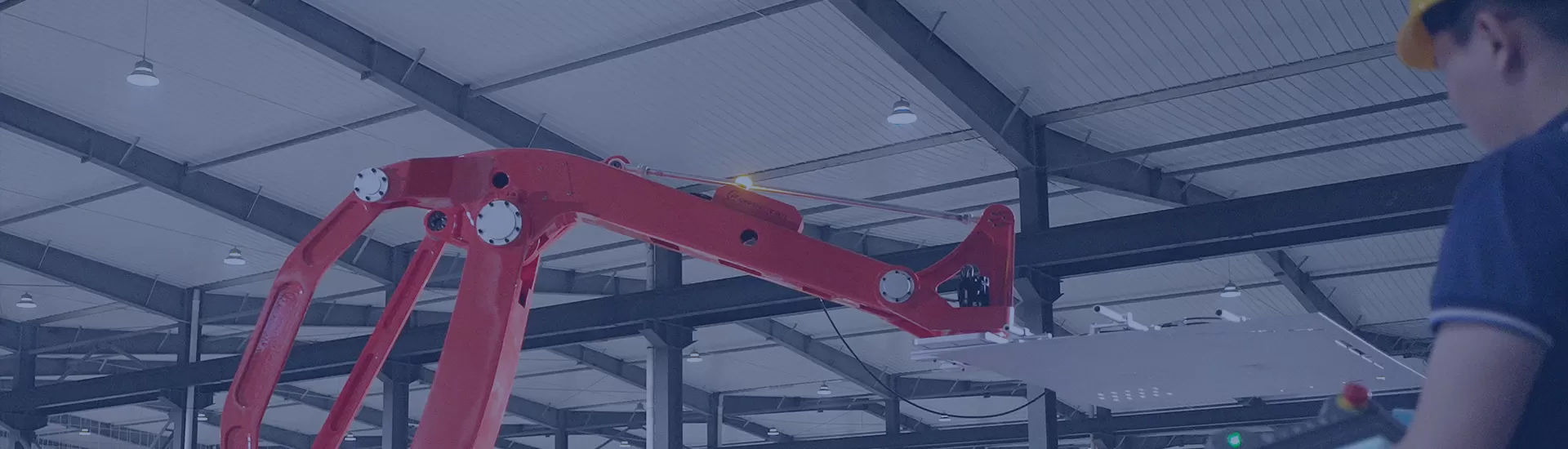
The stamping industry continues to evolve as manufacturers face increasing pressure to improve productivity, reduce downtime, maintain consistent quality, and manage labor shortages. As production demands become more complex, automation integration is no longer viewed as a future investment — it has become an essential strategy for modern stamping facilities.
From material feeding to part transfer and downstream processing, integrated automation systems help manufacturers build more efficient and stable production environments. However, successful automation is not simply about adding robots to a production line. It requires a carefully planned system where equipment, workflow, and process requirements work together seamlessly.
At FUXIN Robot, we provide automation solutions designed specifically for stamping applications, including intelligent stamping robots, transfer systems, automatic material feeders, and multi-process manipulators that help manufacturers improve overall line efficiency.

Understanding Automation Integration in Stamping Facilities
Automation integration refers to the process of connecting multiple production technologies into a unified and coordinated manufacturing system. In stamping facilities, this typically includes material feeding systems, robotic handling equipment, transfer mechanisms, stamping presses, and secondary processing equipment.
Instead of operating as isolated machines, integrated systems communicate and function together to support continuous production flow. This coordinated approach helps manufacturers reduce manual intervention, minimize production interruptions, and improve operational consistency.
For stamping manufacturers, automation integration often focuses on three primary objectives:
· improving production efficiency
· increasing process consistency
· reducing operational risk and labor dependency
As market competition increases, facilities that rely heavily on manual handling may struggle to maintain productivity and long-term scalability.
Key Components of an Integrated Stamping Automation System
A successful automation project begins with selecting the right equipment for the production process. While every facility has different production requirements, several core components are commonly found in automated stamping lines.
Material Feeding Systems
Efficient feeding is critical for maintaining stable stamping performance. Inconsistent feeding can lead to positioning errors, production delays, and material waste.
Solutions such as automatic material feeders and 3-in-1 feeder systems are designed to streamline coil handling, leveling, and feeding processes while improving material stability throughout production.
A properly integrated feeding system can help manufacturers:
· reduce manual loading operations
· improve feeding accuracy
· support continuous production flow
· minimize material handling errors
For high-volume stamping applications, stable feeding performance is often the foundation of overall line efficiency.
Stamping Robots and Manipulators
Robotic automation plays a major role in modern stamping facilities. Robots and manipulators are commonly used for loading, unloading, part positioning, and inter-process transfer tasks.
FUXIN Robot offers solutions such as the Intelligent Joint Stamping Robot and Intelligent Swing Arm Stamping Manipulator, which are designed to improve handling speed and production flexibility in stamping environments.
Compared with manual operations, robotic systems can help facilities achieve:
· faster transfer cycles
· improved positioning consistency
· reduced operator exposure to hazardous areas
· more stable production performance
In addition, programmable robotic systems allow manufacturers to adapt more easily to changing production requirements.
Transfer Automation Systems
As stamping lines become more complex, transferring parts efficiently between stations becomes increasingly important. Transfer automation systems help coordinate movement between presses and reduce delays caused by manual handling.
Transfer robots are particularly useful in multi-station stamping operations where synchronization and timing directly affect production throughput.
Integrated transfer systems can help facilities:
· improve line coordination
· reduce idle time between processes
· support continuous material flow
· improve operational efficiency across the production line
Secondary Processing Automation
Many stamping facilities require additional operations after forming, such as riveting or assembly processes. Integrating these secondary operations into the production line helps improve workflow continuity and reduce unnecessary handling.
Automatic riveting machines can support this type of integrated production environment by reducing separate manual processing steps and improving process consistency.
For manufacturers pursuing lean production strategies, integrating secondary processing into the automation system can significantly improve production flow efficiency.
Benefits of Automation Integration in Stamping Facilities
The advantages of automation integration extend beyond labor reduction. A properly designed system can improve multiple areas of manufacturing performance simultaneously.
Improved Productivity
Integrated systems help reduce bottlenecks and maintain stable production speeds throughout the line. Automated feeding, transfer, and handling reduce interruptions and improve cycle consistency.
Better Product Quality
Automation helps minimize inconsistencies caused by manual operations. Precise positioning and repeatable motion contribute to improved dimensional accuracy and reduced part damage.
Enhanced Workplace Safety
Stamping environments involve heavy equipment, repetitive handling, and high-speed operations. Automation reduces direct operator interaction with potentially hazardous processes and helps create a safer production environment.
Reduced Operational Costs
Although automation requires initial investment, integrated systems can reduce long-term labor costs, improve material utilization, and minimize downtime caused by manual errors or inconsistent handling.
Greater Production Flexibility
Modern robotic systems can often be reprogrammed for different parts or production requirements. This flexibility allows manufacturers to adapt more efficiently to changing customer demands and product variations.
Factors to Consider Before Implementing Automation
Before integrating automation into a stamping facility, manufacturers should carefully evaluate several operational factors.
Production Volume
High-volume production lines often benefit most from full automation integration. However, flexible automation solutions can also support medium-volume and mixed-production environments.
Part Characteristics
Part size, weight, shape, and material properties all influence the type of automation equipment required. Fragile or complex components may require more advanced handling systems.
Facility Layout
Available floor space, press arrangement, and production flow affect how automation systems are designed and integrated into the facility.
Process Complexity
Facilities with multiple stamping stages, transfer operations, and downstream processes may require more advanced integration strategies to maintain efficiency across the entire line.
Future Scalability
Manufacturers should also consider future production expansion when designing automation systems. Flexible and modular automation solutions often provide better long-term value.
The Importance of a System-Level Integration Approach
One of the most common challenges in stamping automation projects is focusing too heavily on individual machines instead of the overall production system.
A robot alone cannot solve feeding instability. A feeder alone cannot optimize downstream transfer efficiency. True automation success depends on how all components work together as part of a coordinated manufacturing process.
This is why system-level integration is essential. Feeding systems, robots, transfer equipment, and secondary processing stations must be selected and configured to support the complete production workflow.
At FUXIN Robot, our automation solutions are designed around the operational needs of stamping manufacturers. By combining feeding systems, stamping robots, transfer automation, and multi-process manipulators, we help facilities create more efficient and scalable production lines.
Choosing the Right Automation Partner
Selecting the right automation partner is an important step in any integration project. Manufacturers should evaluate not only equipment capabilities, but also industry experience, technical support, and system integration expertise.
An experienced automation provider should be able to:
· understand stamping production requirements
· recommend suitable automation configurations
· support installation and commissioning
· provide ongoing technical assistance
· help optimize long-term production performance
The most effective automation solutions are those designed specifically around the customer’s production goals and operational challenges.
Conclusion
Automation integration has become a critical part of modern stamping manufacturing. By combining feeding systems, robotic handling, transfer automation, and secondary processing equipment into a coordinated production environment, manufacturers can improve efficiency, consistency, safety, and long-term competitiveness.
As production demands continue to increase, integrated automation solutions will play an even greater role in helping stamping facilities maintain reliable and scalable manufacturing operations.
FUXIN Robot remains committed to providing intelligent automation solutions for stamping applications, helping manufacturers build smarter and more efficient production systems.


