

 Portuguese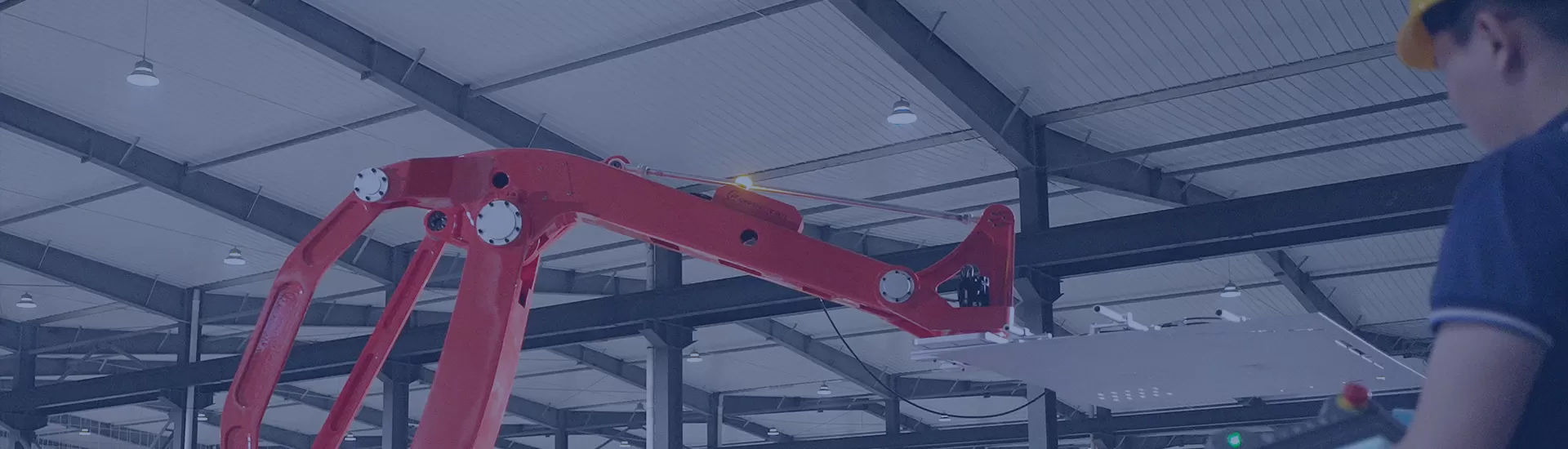
Today, we would like to introduce FUXIN’s swing arm robot. Swing arm robots are indispensable tools in injection molding and many other manufacturing industries. Like other injection molding robots, they help improve production efficiency, precision, and overall automation. At the same time, swing arm robots offer their own unique advantages. Let’s take a closer look.

High-Speed Sheet Metal Transfer with Automatic Swing Arm Stamping Manipulator
The automatic swing arm stamping manipulator is designed for high-speed loading, unloading, picking, placing, and transferring in metal stamping production lines. Unlike conventional manual handling, this swing arm robot can move sheet metal parts smoothly between presses, dies, punching machines, drilling machines, tapping machines, and other processing equipment. With a wide payload range from 3 kg to 20 kg, high-speed operation of 8–20 times per minute, and stable output of 800–1000 PCS/hour, it helps manufacturers improve stamping line efficiency while reducing labor intensity and safety risks.
Its flexible swing arm structure supports multi-station operation and can be freely combined according to different production layouts. The robot is suitable for pneumatic punching machines, hydraulic punching machines, gear punching machines, and automatic stamping lines. Built-in vacuum system, point-to-point programming, dual-sheet detection, and interlocked safety signals ensure stable gripping, fast mold changeover, and reliable production continuity. For automotive parts, appliance panels, electronic components, metal hardware, and precision stamped parts, this industrial stamping manipulator provides a cost-effective automation upgrade with high precision, strong compatibility, and long service life.
Automate Repetitive Tasks with Swing Arm Robots
Swing arm robots are highly effective in injection molding production lines, where they quickly transfer molded parts between workstations on the injection molding machine. Their flexibility allows them to adapt to different mold configurations, helping manufacturers optimize production across various product lines. By integrating additional software, these robots can be programmed to perform complex movements, handle delicate materials, and complete demanding tasks with minimal human intervention. Swing arm robot automation also helps reduce exposure to hazardous environments, minimize material waste, and improve overall productivity. As a result, they create a more efficient and dynamic injection molding environment while reducing operator workload and stress.
Achieve Consistent Part Placement with Swing Arm Robots
Swing arm robots can use advanced gripper sensors to rotate products by 90°. With real-time sensor feedback, the robotic arm can adjust its movements according to changes in the molding process, ensuring a high level of consistency in part and component placement. For different injection molding machines and production tasks, the robotic arms can be equipped with corresponding programming to ensure accurate placement of each part within the injection molding environment, while also reducing waste and product loss.
More Flexibility When Changing Molds
One of the key advantages of swing arm robots is their flexibility in mold changing, which comes from their programmability and adaptability. Instead of relying on manual labor, operators can program the robotic arm to perform precise mold changes efficiently and consistently. The end effector, or tool attached to the end of the robotic arm, also plays a critical role. Specialized end effectors allow the robot to grasp, lift, and change molds of different shapes and sizes. In addition, advanced sensors and vision systems enable the robotic arm to accurately identify and position molds, ensuring smooth transitions between production runs. Their ability to work within limited spaces and tight tolerances makes them especially suitable for complex mold-changing tasks.
Adaptable Programming for Various Injection Molding Needs
Swing arm robots can be programmed and customized according to specific applications, molding requirements, and material types. This versatility allows plastic manufacturers to optimize robot performance for different production scenarios and injection molding machines, making swing arm robots an indispensable solution for facilities with diverse molding needs. As injection molding processes become more specialized and varied, the adaptability of swing arm robots gives manufacturers a valuable advantage in a highly competitive industry. This capability further strengthens their role as a key automation asset in modern manufacturing.
In the End
The above introduction highlights several important aspects of swing arm robots and helps operators and manufacturers better understand the role they play in the injection molding industry and other manufacturing sectors. Swing arm robots have become indispensable industrial automation tools, and a clearer understanding of their functions and applications can help businesses improve production efficiency and complete tasks more effectively.


