

 Portuguese
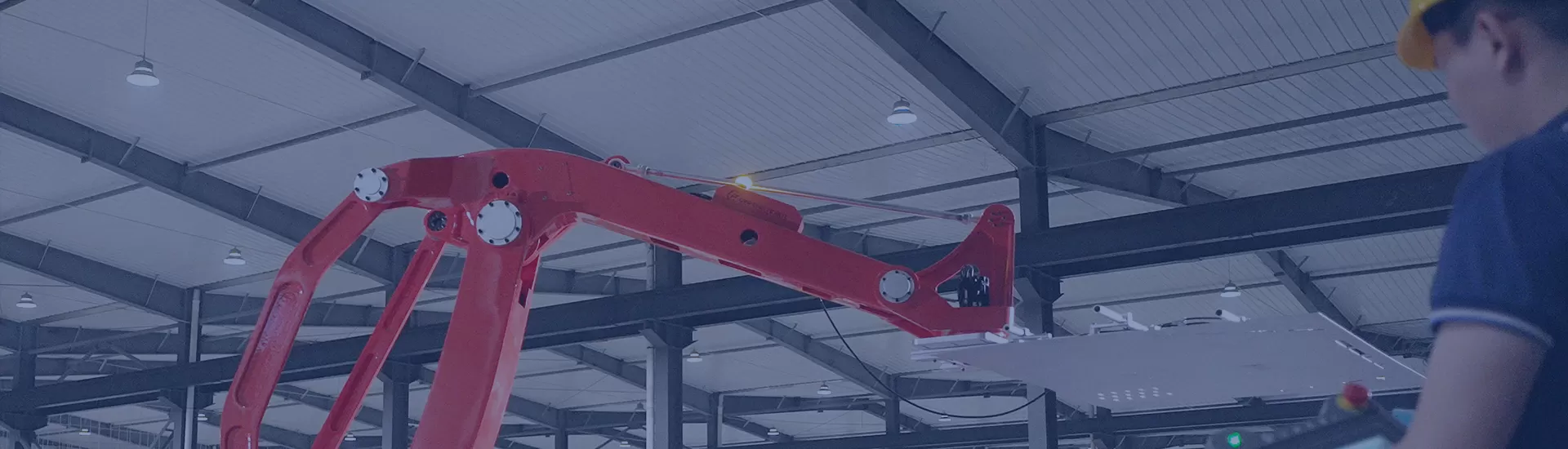
Computer numerical control (CNC) machines are designed to produce parts with high dimensional accuracy and repeatability. Yet cutting is only one part of machining productivity. Workpieces must also be supplied, positioned, clamped, removed, sorted, and transferred to the next operation. When these tasks depend entirely on manual handling, a CNC machine may spend considerable time waiting between cycles.
Robotic arms connect machining operations with the material flow around them. By automating repetitive handling, they make production more continuous and consistent. Their importance extends beyond replacing manual loading and unloading: they can improve machine utilization, workpiece handling, workplace safety, and coordination between manufacturing stages.

CNC Productivity Depends on More Than Cutting Speed
A CNC machine may complete a cutting program in a predictable time, but the full production cycle also includes removing the finished part and loading the next blank. Operators may need to open the door, release the workpiece, clean the fixture, position a new part, confirm clamping, and restart the cycle.
These handling intervals are known as non-cutting time. They do not directly remove material, but they affect how many parts a machine can produce during a shift. In repetitive production, even short delays accumulate.
A robotic arm can perform the handling sequence in a programmed pattern. Once the CNC machine reaches a safe state, the robot can unload the finished component and load the next workpiece. This creates a more coordinated relationship between machining time and handling time.
1. Increase CNC Machine Utilization
A key reason to integrate robotic arms with CNC machines is to reduce avoidable idle time. A CNC machine generates output while it is actively processing a workpiece; time spent waiting for the next part reduces its productive utilization.
Manual tending can interrupt this flow when an operator is responsible for several machines or other tasks. A robot follows a programmed sequence and repeats loading and unloading movements without the natural variation of manual operation.
The result is a more predictable transition between machining cycles. In suitable production cells, one robot may also tend multiple CNC machines. This depends on machining cycle duration, robot travel paths, machine layout, and the time required for each loading operation. When coordinated, the robot can move between machines while keeping each one supplied with workpieces.
A robot does not make the cutting process itself faster. Instead, it reduces the time a capable CNC machine spends waiting for an operator or the next workpiece.
2. Make Workpiece Handling More Consistent
Workpiece positioning is an important link between automated handling and machining quality. A part must be placed in the correct orientation and seated properly in a chuck, vise, or fixture. Inconsistent loading can cause clamping problems, misalignment, surface damage, or cycle interruptions.
A robotic arm repeats programmed pickup and placement movements. Combined with suitable grippers, part-present sensors, and fixture signals, it can establish a consistent handling routine. The robot approaches the loading position, places the workpiece, releases it, and moves clear of the machine in a controlled sequence. During an automated cycle, the robot and CNC controller exchange status signals: the spindle has stopped, the door is open, the fixture is released, the new part is seated, clamping is confirmed, and the robot has moved clear before machining restarts.
This consistency is valuable in batch production, where the same component passes through repeated machining cycles. It can also support traceable production routines when handling steps are coordinated with machine status and inspection.
Handling repeatability should not be confused with machining accuracy. A robotic arm does not automatically improve the dimensional accuracy of a CNC-cut feature. Final accuracy still depends on the machine tool, cutting tools, workholding, calibration, material behavior, and machining parameters. The robot makes the transfer and positioning stages more consistent.
3. Reduce Repetitive Work and Improve Operator Safety
CNC machine tending can involve repeated lifting, reaching, gripping, and turning throughout a shift. Depending on the process, operators may also handle sharp-edged parts, hot components, cutting fluid, or metal chips.
Automating these movements can reduce direct exposure to physically demanding handling tasks. A robotic arm can move workpieces between a loading area and a machine enclosure, while operators focus more on setup, tool management, process supervision, quality checks, and maintenance.
This does not remove the need for safe work practices. Robotic cells still require appropriate guarding, interlocks, emergency stops, and safe access procedures. The machine, robot, gripper, and surrounding equipment must operate as a coordinated system so that loading and unloading take place only under permitted conditions.
When properly integrated, robotic tending improves the division of work: robots handle repetitive transfers, while skilled operators manage activities that require judgment and process knowledge.
4. Support Longer and More Continuous Production
A CNC machine may be capable of running for extended periods, but unattended production depends on more than the machining program. Raw parts must be available, finished parts need somewhere to go, and the handling sequence must respond correctly to machine status.
Robotic arms help create the repeatable material flow needed for longer production runs. Parts can be staged in trays, racks, or pallets. The robot loads a blank, waits for machining to finish, removes the completed part, and places it in a designated output position.
In more developed cells, handling can extend to part verification, air blow-off, washing, deburring, gauging, sorting, or packaging. These additional operations reduce manual transfers between production stages.
This type of automation can support lights-out machining during planned periods, such as breaks or overnight shifts. However, unattended operation also relies on machine monitoring, tool-life management, material replenishment, fault detection, and recovery procedures. The robot is one part of the system, not a substitute for the controls that keep the cell operating safely.
5. Connect CNC Machines with Other Manufacturing Processes
Many components require more than one machining operation. A part may move from turning to milling, drilling, grinding, deburring, cleaning, or inspection. If every transfer is handled manually, work-in-process can accumulate between stations and production flow becomes harder to coordinate.
Robotic arms and transfer systems can move parts between machines or process stations according to a defined sequence. A component can be unloaded from one machine and delivered to a second operation, reducing repeated manual handling and helping maintain an organized production route.
The same principle applies to lines that combine machining with assembly or finishing. Automated material handling links individual machines into a connected process rather than leaving each workstation to operate in isolation.
FUXIN's industrial automation portfolio includes robotic arms, manipulators, feeders, and transfer equipment for manufacturing material handling. Its industrial robot products provide an overview of these automation categories. The Transfer Robot Series illustrates how transfer equipment can connect workstations and support material movement in multi-process production environments. These product ranges are presented for stamping and broader manufacturing transfer applications, rather than as dedicated CNC machine-tending models.
6. Make Production Flow More Adaptable
Manufacturing requirements change with product mix, batch size, and process sequence. A fixed transfer device may be effective for one narrowly defined movement, while a programmable robotic arm can perform different handling paths as the production arrangement changes.
With suitable programming, grippers, and part presentation, a robotic system can handle variations in workpiece orientation or move components between stations. This is useful in facilities that produce several part types or gradually expand automation across a workshop.
The value comes from coordinating the robot with the wider process. Machine access, fixture positions, material supply, output storage, and safety zones all influence how effectively the system adapts. When these elements are integrated, robotic handling helps manufacturers adjust production flow without redesigning every movement as a separate manual task.
Conclusion
Robotic arms are important in CNC machining because they improve the connection between cutting operations and the material handling activities surrounding them. By reducing non-cutting delays, repeating workpiece transfers consistently, limiting repetitive manual handling, and linking process stages, robots help CNC equipment operate as part of a more continuous production system.
Robotic arms do not replace CNC machining expertise or independently guarantee higher cutting accuracy. They support the production process by making handling more predictable and allowing people, machines, and downstream operations to work together more efficiently. As CNC workshops move toward connected manufacturing, robotic handling is becoming an increasingly important part of production performance.


