

 Portuguese
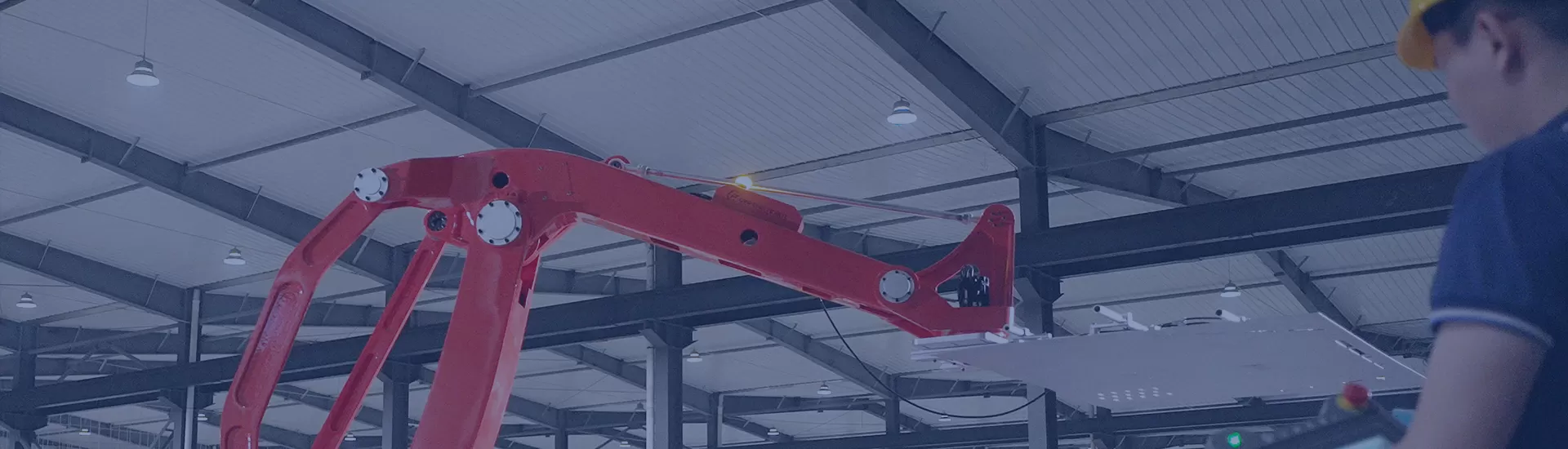
1. What Is a Robot Manipulator?
A robot manipulator is a mechanical system designed to move and position objects through a series of interconnected links and joints. Often referred to as a robotic arm, it replicates some of the movement capabilities of a human arm while operating through programmed commands and automated control systems.
Robot manipulators are widely used in industrial automation, manufacturing, material handling, assembly, and other fields where controlled movement, repeatability, and positioning accuracy are important.
Depending on their mechanical configuration and intended functions, manipulators can perform simple pick-and-place operations as well as complex tasks involving multiple movement axes, precise positioning, and controlled physical interaction.

2. Main Components of a Robot Manipulator
A robot manipulator consists of several interconnected components. Their mechanical and electrical characteristics determine the robot's movement capabilities, payload capacity, and operating performance.
Base and Links
The base provides structural support for the manipulator and maintains stability during operation. It may be fixed to a production platform or integrated into a mobile system.
Links are the rigid structural sections connecting the joints. Their length, material, and geometry influence the robot's reach, stiffness, payload capacity, and overall workspace.
Joints
Joints connect the links and enable relative movement between different sections of the robotic arm. Common joint configurations include:
◆ Revolute joints: Produce rotational movement around a fixed axis.
◆ Prismatic joints: Enable linear movement along a defined axis.
◆ Cylindrical joints: Combine rotational and linear movement.
◆ Spherical joints: Allow rotation around multiple axes.
The number and arrangement of joints determine the manipulator's degrees of freedom (DoF), which describe how many independent movements it can perform.
Actuators and Drive Systems
Actuators generate the force and motion required to operate the joints. Common options include:
◆ Electric actuators: Provide precise positioning and controllable motion, making them widely used in modern robotic arms.
◆ Hydraulic actuators: Deliver high force and are suitable for heavy-duty applications.
◆ Pneumatic actuators: Use compressed air to produce fast movements in relatively simple automation tasks.
Electric servo motors are commonly combined with gear reducers and position encoders to provide controlled joint movement and feedback.
End-Effectors
The end-effector is mounted at the end of the robotic arm and interacts directly with the workpiece or surrounding environment.
Common examples include mechanical grippers, vacuum suction cups, welding torches, and specialized cutting or processing tools. The end-effector determines what operation the manipulator can perform and must be compatible with the workpiece's shape, weight, and handling requirements.
Sensors
Sensors provide information about the robot's position and operating environment. Encoders measure joint movement, force-torque sensors detect applied forces, and vision systems help identify object locations and orientations.
These components support accurate positioning, motion correction, and interaction with surrounding equipment.
3. Common Types of Robot Manipulators
Robot manipulators can be classified according to their joint arrangements and mechanical structures. Different configurations provide different workspaces, movement characteristics, and application capabilities.
Cartesian Robot Manipulators
Cartesian manipulators operate along three perpendicular linear axes: X, Y, and Z. Their movement follows straight-line paths, creating a rectangular working envelope.
Their relatively straightforward mechanical structure supports accurate positioning and repeatable linear movement. Typical applications include machine loading, component positioning, automated assembly, and pick-and-place operations.
Cylindrical Robot Manipulators
Cylindrical manipulators combine rotational movement around a vertical axis with linear movement along radial and vertical directions.
This configuration creates a cylindrical working envelope and allows the robot to access positions around its central column. Common applications include machine tending, material transfer, and automated handling in compact production spaces.
Spherical or Polar Robot Manipulators
Spherical manipulators use a combination of rotational joints and linear extension to create a spherical or partially spherical workspace.
Their mechanical arrangement allows the arm to reach different positions within a relatively large three-dimensional area. Applications include material handling, welding, and operations requiring access to different positions around a fixed base.
Articulated Robot Manipulators
Articulated manipulators consist of multiple links connected by rotary joints. Their structure resembles a human arm, allowing flexible movement across multiple axes.
Industrial articulated robots commonly have six axes, enabling control of both the position and orientation of the end-effector within their working envelope.
They are widely used in automotive manufacturing, welding, painting, assembly, and other processes involving complex movement paths.
SCARA Robots
SCARA (Selective Compliance Assembly Robot Arm) manipulators typically use two rotary joints for horizontal movement and a vertical linear axis.
Their configuration provides fast, repeatable movement in a horizontal plane, making them suitable for electronic component assembly, packaging, sorting, and small-part handling.
4. Degrees of Freedom and Robot Axes
Degrees of freedom describe the independent movements available to a robot manipulator. Each controlled axis contributes to its ability to position and orient the end-effector.
Common configurations include:
◆ Three-axis manipulators: Typically provide linear movement along X, Y, and Z directions.
◆ Four-axis manipulators: Add rotational movement to support additional positioning flexibility.
◆ Six-axis manipulators: Provide three positional and three rotational degrees of freedom, allowing more flexible control of the end-effector's position and orientation.
◆ More than six axes: Can provide redundant movement options, helping robots reach complex positions or avoid obstacles.
A higher axis count does not automatically mean better performance. The appropriate configuration depends on the required workspace, movement complexity, positioning accuracy, and application.
5. How Does a Robot Manipulator Work?
A robot manipulator operates through the coordination of mechanical movement, motion planning, and control systems.
First, the controller receives a target position or movement instruction. Kinematic calculations determine how the robot's joints should move to reach the required position.
Two important concepts are:
◆ Forward kinematics: Calculates the position and orientation of the end-effector based on the current joint positions.
◆ Inverse kinematics: Determines the required joint positions to achieve a specified end-effector position and orientation.
The controller then sends movement commands to the actuators. Sensors measure actual joint positions and provide feedback, allowing the control system to correct deviations from the intended movement.
Trajectory planning determines how the robot moves between target positions. It controls factors such as velocity, acceleration, and motion continuity to reduce sudden movements and maintain stable operation.
Closed-loop control is particularly important in applications requiring high positioning accuracy and repeatability because it uses sensor feedback to adjust movement during operation.
6. Industrial Applications of Robot Manipulators
Robot manipulators are used across a wide range of industrial processes.
Manufacturing and Assembly
Robotic arms perform component positioning, fastening, assembly, and inspection. Their repeatable movements help maintain consistency in production processes, particularly in automotive and electronics manufacturing.
Material Handling
Manipulators transfer raw materials, workpieces, and finished products between production stations. They are also used for sorting, palletizing, machine loading, and unloading.
Welding and Cutting
Industrial robotic arms can carry welding torches or cutting tools along programmed paths. Controlled movement helps maintain consistent tool positioning throughout the operation.
Packaging and Logistics
Robotic manipulators handle product picking, sorting, packing, and palletizing. Different grippers and vacuum systems allow them to work with products of different shapes and sizes.
Healthcare and Medical Applications
Specialized robotic manipulators support surgical instruments, rehabilitation equipment, and laboratory automation. Their controlled movements are particularly valuable in procedures and operations requiring consistent positioning and fine motion control.
7. Frequently Asked Questions
1. What is the difference between a robot manipulator and a robotic arm?
A robotic arm is a common form of robot manipulator. The term robot manipulator can also describe other mechanical configurations designed to position and move objects.
2. What determines the degrees of freedom of a robot manipulator?
The number of independently controlled joints and their mechanical arrangement determine the robot's degrees of freedom.
3. Why are six-axis robot manipulators widely used in manufacturing?
Six-axis configurations provide flexible control over the position and orientation of the end-effector, supporting complex tasks such as welding, assembly, and material handling.
4. What is the role of an end-effector?
An end-effector performs the actual operation at the working end of the robot, such as gripping, lifting, welding, or cutting.
5. What is the difference between forward and inverse kinematics?
Forward kinematics calculates the end-effector position from joint positions, while inverse kinematics calculates the joint positions required to reach a target position.
Conclusion
Robot manipulators combine mechanical structures, actuators, sensors, and control systems to achieve automated movement and object handling. Their different configurations, degrees of freedom, and end-effectors make them suitable for a broad range of industrial and specialized applications.
Understanding their components, kinematics, and operating principles provides a foundation for understanding how robotic systems perform increasingly complex automation tasks.


